A First Visit to a Play with No Interval
A first visit to a play with no interval feels easier when you settle in, follow changes in attention and give the ending room to land.
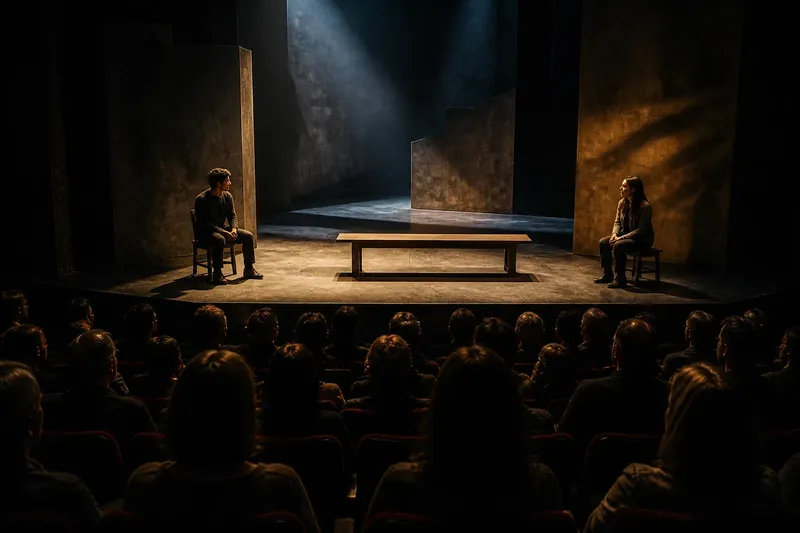
The common mistake at a first visit to a play with no interval is to treat the whole performance as one long stretch of concentration. That can make a small lapse feel like failure, and leave you watching the clock instead of the stage. A continuous play has its own rhythm: you can settle, shift your attention and let the ending arrive without trying to catch every detail.
A continuous performance asks for flexible attention
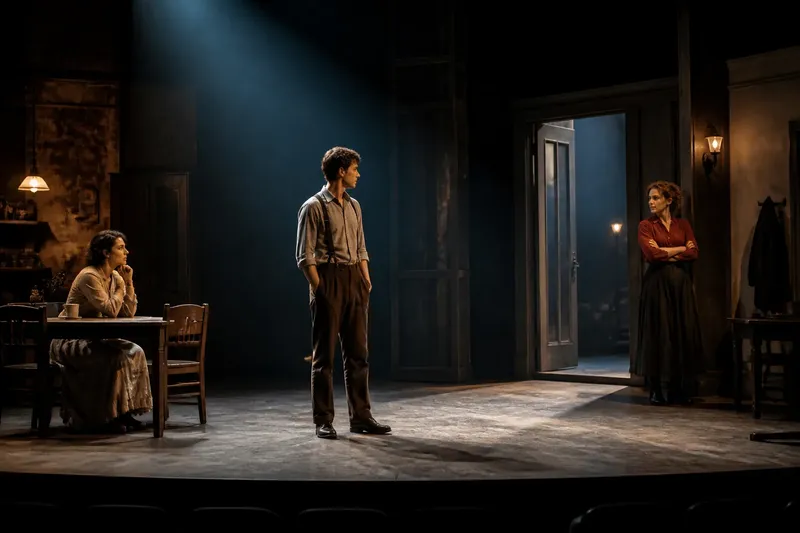
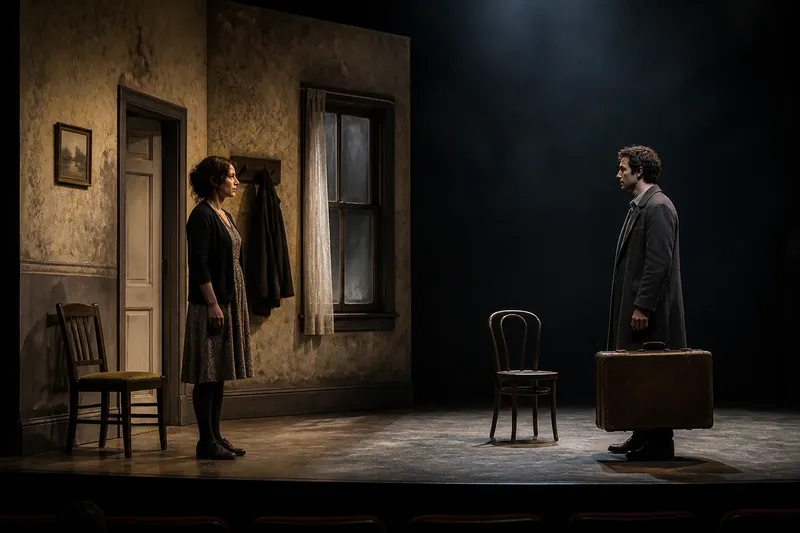
A play with no interval is performed without a scheduled break between its beginning and end. The stage may change, actors may leave and return, and the action may move through distinct scenes, but the audience remains in the auditorium. Some performances are short; others last long enough that you may notice your posture or attention changing. There is no single correct way to watch.
It helps to distinguish the performance’s structure from your own concentration. The story continues whether you are following every line or briefly noticing the lighting, a repeated gesture or the person beside you. Attention naturally moves. You can bring it back by looking for what has changed: who is speaking now, where the action is taking place, or what an actor seems to want.
This approach suits theatre because meaning does not arrive through dialogue alone. A pause, a shift in distance or a sound from offstage may carry part of the scene. If you miss a line, you can still follow the relationships and mood rather than trying to reconstruct every word.
Settle before the action begins
Arriving with enough time to find your seat can make the opening easier to receive. Check your ticket and the venue’s entry guidance beforehand, then take a moment to put away anything that may distract you. Silence your phone completely; a lit screen can pull attention from nearby audience members as well as from you.
Choose a comfortable position and let your shoulders loosen. You do not need to study the programme before the play starts. If you like reading it, do so before the lights dim, then put it aside. A brief look at the cast or a note about the setting may orient you, but the first stage image is often designed to be encountered without explanation.
There is no need to prepare by memorising the plot. If the story is unfamiliar, listen for names and watch how characters respond to one another. If you already know it, notice what the production emphasises instead of checking whether every familiar detail appears.
Follow changes rather than trying to hold everything
In a continuous performance, transitions may be visible rather than hidden by a curtain or a break. A chair moved across the stage can mark a new location; a change in light can alter the mood without changing the set. Treat these shifts as part of the action, not as time to solve the whole play.
One useful question is, “What has changed since the last moment?” It might be a character’s intention, the distance between two people or the amount of control someone has in a conversation. This keeps your attention active without demanding that you interpret every symbol correctly.
Say you are watching a scene in which two siblings begin on opposite sides of a bare stage. One moves a bench between them, and the lighting narrows. You might simply notice that the space now feels divided and listen for whether their exchange softens or sharpens. That observation gives you a thread to follow, even if you miss a sentence.
If your focus wanders, return through a concrete detail: an actor’s voice, a prop being handled or the direction of someone’s gaze. Avoid scolding yourself for drifting. Trying to force perfect concentration can become its own distraction.
Manage comfort without turning the show into a test
Before the performance, use the toilet and take a drink if the venue permits it. Wear layers if you tend to feel warm or cool, and keep bags and belongings arranged so you are not shifting around to reach them. These small choices reduce the number of practical decisions you have to make once the play begins.
If you do need to leave, follow the venue’s guidance and move as quietly as you can. An usher can help if you are unsure about re-entry or access arrangements. It is better to attend to a real need than to spend the rest of the performance worrying about it.
What is not worth the effort is tracking the running time minute by minute. A quick glance at your phone is disruptive, and mentally estimating how much remains rarely makes the performance easier. Let the production’s changes in tempo tell you where you are.
Let the ending finish its work
The end of a play is not always marked by a neat final line followed by immediate applause. An actor may hold a silence, a sound may continue, or the lighting may take a moment to change. Give that final image or pause room to register before deciding that the performance has ended.
After the lights come up, you do not need to form a verdict straight away. You might remember one image, a change in a character or a moment when your attention returned. If you are with someone, ask what stayed with them rather than testing whether you understood the same thing. Different responses can sit beside one another.
Some venues invite audiences to remain seated until a particular cue; others expect people to leave promptly. Follow the ushers and the flow around you. If you want to read the programme or discuss the ending, wait until you are outside the auditorium so others can exit comfortably.
What should you expect at a play with no interval?
Can you leave during a continuous performance?
Usually you can leave if you need to, but re-entry may be limited or handled by an usher. Check the venue’s access and entry information before the show if this is a concern.
What if you lose track of the story?
Return to the person speaking and notice what they appear to want from the others. Relationships, movement and changes in tone can help you rejoin the action without recovering every missed line.
Should you read the programme before the play?
That is a matter of preference. A brief look can clarify names or the setting, while going in without plot details can preserve surprise; neither choice is required for a rewarding visit.
How can you tell when the performance has ended?
Wait for a clear change, such as the lights coming up or the actors acknowledging the audience. If the ending includes silence, resist moving until the moment has finished and the room begins to respond.
A first visit to a play with no interval becomes less demanding when you stop treating attention as something that must stay fixed. Settle in, follow one visible change at a time and allow yourself to miss a detail without losing the whole scene. The ending, given a little quiet space, may tell you more than an immediate explanation would.